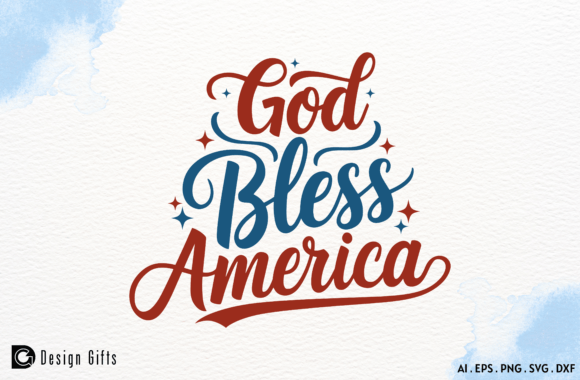
Maximizing Your Patriotic Projects with the Right God Bless America SVG PNG
Patriotism often finds its best expression through creativity. Whether you are crafting a custom t-shirt for a family reunion, designing a vinyl decal for your vehicle, or launching a small print-on-demand business for the upcoming holiday season, having the right digital assets is crucial. This is where a high-quality God Bless America SVG PNG package becomes an essential tool in your creative arsenal. However, not all digital downloads are created equal. Many creators rush into purchasing or downloading files without understanding the technical nuances, leading to frustration, wasted materials, and subpar final products. By understanding what to look for and how to properly utilize these files, you can ensure your projects stand out with professional clarity and durability.
At its core, a God Bless America SVG PNG bundle offers versatility. The SVG (Scalable Vector Graphics) file is ideal for cutting machines like Cricut or Silhouette, allowing you to scale the design to any size without losing edge definition. The PNG (Portable Network Graphics), specifically one rendered at 300 DPI with dimensions of 4500 × 5400 pixels, is perfect for direct printing, sublimation, or use as a transparent overlay in digital designs. When you receive a comprehensive package that includes AI, EPS, SVG, DXF, and PNG formats, you are equipped to handle almost any medium, from fabric and mugs to book covers and photo albums. Yet, possessing these files is only half the battle; knowing how to manage and apply them correctly is where many enthusiasts stumble.
Common Pitfalls in File Management and Preparation
One of the most frequent oversights occurs before the design even touches the material: file extraction. When you purchase a premium bundle, the files are typically compressed into a single ZIP file to facilitate easy downloading. A common mistake, especially among beginners, is attempting to open or import the design directly from within the compressed folder. This often leads to software errors, missing layers, or the inability of cutting machines to read the path data correctly. To avoid this, always extract the contents first. You can use built-in operating system tools by double-clicking the folder, or utilize dedicated software like WinZip or WinRAR. Once extracted, organize your files into a dedicated project folder. This simple step prevents data corruption and ensures that your software can access the full resolution of the transparent high-quality PNG or the precise vectors of the SVG.
Another area where creators often face challenges is regarding color customization. While the downloaded design may come in a specific black or white configuration, the beauty of vector formats like SVG, AI, and EPS lies in their editability. A misconception exists that the design is fixed and cannot be altered without advanced graphic design skills. In reality, these files are designed to be flexible. If you are creating a design for a dark-colored t-shirt, you may need to invert the colors or change the fill to white or a metallic shade. Failing to adjust the color profile to match your base material can result in a design that disappears or lacks contrast. Always preview your design in your software against a background color similar to your final product to ensure visibility and aesthetic appeal.
Ensuring Quality Across Different Applications
The intended usage of your God Bless America SVG PNG should dictate how you prepare the file. For instance, if you are working on Memorial Day themed projects involving heat transfer vinyl (HTV), the integrity of the cut lines in the SVG file is paramount. Low-quality vectors often contain unnecessary nodes or broken paths, which can cause the blade of your cutting machine to jerk or tear the vinyl. High-quality files, such as those providing distinct DXF and SVG options, allow you to choose the format that interacts best with your specific machine software. Always perform a test cut on a scrap piece of material. This "waste" of a small snippet saves you from ruining an entire roll of expensive vinyl or a blank garment.
Conversely, when utilizing the 300 DPI PNG image for sublimation on mugs, tumblers, or bags, resolution is king. Some users mistakenly believe that any image found online will suffice for printing. However, printing a low-resolution image on a large surface like a tote bag or a tumbler wrap results in pixelation and blurriness, which looks unprofessional. The specification of 4500 × 5400 pixels is critical here; it ensures that even when stretched over a curved surface or printed on a large fabric area, the edges remain crisp and the text legible. Before sending a job to your printer or heat press, zoom in to 100% on your screen. If the edges look jagged or fuzzy at this magnification, the file may not be suitable for large-scale printing, regardless of the claimed DPI.
Strategic Choices for Business and Personal Use
For entrepreneurs running a POD (Print on Demand) business or selling handmade goods on platforms like Etsy, the license and usability of the design are vital. While personal projects allow for more experimentation, commercial ventures require consistency and reliability. A common error is using a single file type for all products. For example, using a PNG for a vinyl decal order instead of the SVG can lead to weeding difficulties and a less durable sticker. Conversely, trying to print a complex SVG directly without rasterizing it properly for certain printers can cause rendering issues. Understanding the strengths of each format in your bundle—AI and EPS for professional editing in Adobe Illustrator, DXF for older cutting software, and PNG for web mockups—allows you to streamline your workflow and reduce production time.
Furthermore, consider the context of your project. A design intended for a scrapbook or photo album might require different layering than one meant for an iron-on transfer. When creating layered paper crafts, the transparency of the PNG is useful for visualizing placement, but the cut precision of the SVG is necessary for the actual assembly. Overlooking these distinctions can lead to misaligned layers and a finished product that looks cluttered rather than cohesive. Take the time to separate elements if your software allows, or utilize the provided formats to their fullest potential to achieve depth and dimension in your crafts.
Making the Right Decision for Your Next Project
Before finalizing your purchase or beginning your workflow, take a moment to evaluate your specific needs. Are you looking to create a one-off gift for a family member, or are you stocking up inventory for the 4th of July? Do you have access to a cutting machine, or will you be relying solely on a home printer? Answering these questions helps you determine which aspect of the God Bless America SVG PNG suite you will leverage most. Remember that the value of these digital assets lies not just in the image itself, but in the flexibility they offer. The ability to change colors, resize without quality loss, and apply the design to diverse surfaces like cards, stickers, and backgrounds makes them a powerful resource.
Ultimately, the goal is to create something that honors the spirit of the occasion with pride and professionalism. By avoiding the traps of improper file handling, ignoring resolution requirements, and mismatching file types to materials, you elevate the quality of your work. Whether you are a hobbyist enjoying a weekend of scrapbooking or a marketer designing a campaign, attention to these technical details ensures satisfaction. We encourage you to experiment with the files, explore the color variations, and share your feedback. Your experience contributes to the community of creators, helping others navigate the world of digital crafting with confidence and success.